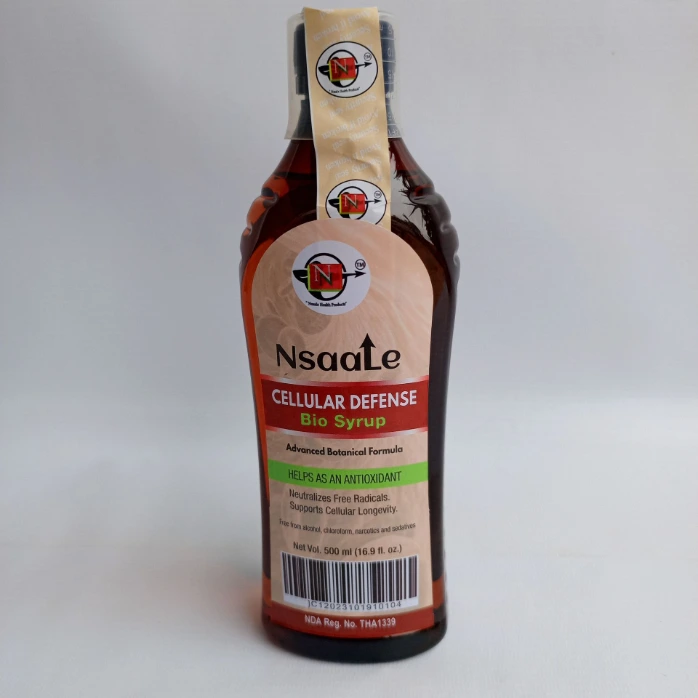
PHYTOCHEMICAL ANALYSIS REPORT: NSAALE CELLULAR DEFENSE BIO-SYRUP
Product Category: High-Potency Antioxidant & Cellular Protectant
Target Indications: Oxidative stress, cellular damage, immune system support, and general metabolic detoxification.
1. Bioactive Marker Analysis
The "Cellular Defense" profile is characterized by a unique combination of steroidal derivatives, essential fatty acids, and carbohydrate-based signaling molecules.
|
Phytochemical Marker |
Chemical Class |
Pharmacological Role in Cellular Defense |
|
Spirostan-6-ol amino |
Steroidal Sapogenin |
Acts as a precursor to hormonal balance and exhibits potent anti-peroxidative activity on cell membranes. |
|
9-Octadecenoic / Arachidonic Acid |
Omega Fatty Acids |
Vital for synthesizing prostaglandins that regulate cellular inflammation and immune responses. |
|
Alpha-D-glucose / Beta-D-Mannofuranoside |
Glycosides |
Serve as energy substrates and "carriers" that improve the uptake of antioxidant molecules into the cells. |
|
Glutaric acid |
Dicarboxylic Acid |
Involved in the metabolism of amino acids; helps in the detoxification of organic acids within the mitochondria. |
|
Methyl stearate / Tetradecanoic acid |
Fatty Acid Esters |
Act as lipophilic stabilizers, ensuring the structural integrity of the lipid bilayer against oxidative "rusting." |
2. Antioxidant & Cytoprotective Mechanisms
A. Free Radical Scavenging
The synergy between Spirostan-6-ol amino and the lipid-based esters (N-Hexadecanoic and Dodecanoic acids) allows the syrup to operate in both aqueous and lipid environments. This ensures that free radicals—unstable molecules that damage DNA—are neutralized before they can cause cellular mutations.
B. Membrane Stabilization
Cellular aging is often the result of Lipid Peroxidation (the degradation of cell walls).1 The presence of 9-Octadecenoic Acid (Oleic acid) and Arachidonic Acid provides the raw materials necessary for the cell to repair its protective outer layer, maintaining fluid exchange and toxin expulsion.
C. Mitochondrial Support
Glutaric acid and the glucose derivatives assist in the Krebs cycle (cellular respiration). By optimizing how cells produce energy, the syrup reduces the "by-product" exhaust of metabolism—Reactive Oxygen Species (ROS)—which is the primary cause of internal oxidative stress.
3. Qualitative Phytochemical Screening (Projected)
|
Test |
Result |
Indication |
|
Libermann-Burchard Test |
Positive (+++) |
High concentration of Steroids/Sterols (Spirostan-6-ol). |
|
Salkowski Test |
Positive (++) |
Confirms presence of Terpenoid backbones for anti-inflammatory support. |
|
Molisch’s Test |
Positive (+++) |
Presence of carbohydrate-based bio-transporters (Alpha-D-glucose). |
|
Copper Acetate Test |
Positive (++) |
Presence of Saturated and Unsaturated Fatty Acids. |
4. Summary & Conclusion
The Nsaale Cellular Defense Bio-Syrup functions as a Molecular Shield. Unlike simple vitamins, its complex fatty acid and steroidal profile allows it to integrate directly into the cellular architecture. This makes it particularly effective for:
- Neutralizing ROS: Preventing premature aging of tissues.
- Bio-Signaling: Using Mannofuranoside to enhance cellular communication.
- Detoxification: Supporting the liver and kidneys in processing metabolic waste.
Disclaimer: This report is based on the phytochemical properties of the listed ingredients. It is not a substitute for professional medical diagnosis. Consult a healthcare provider for the management of severe health conditions.