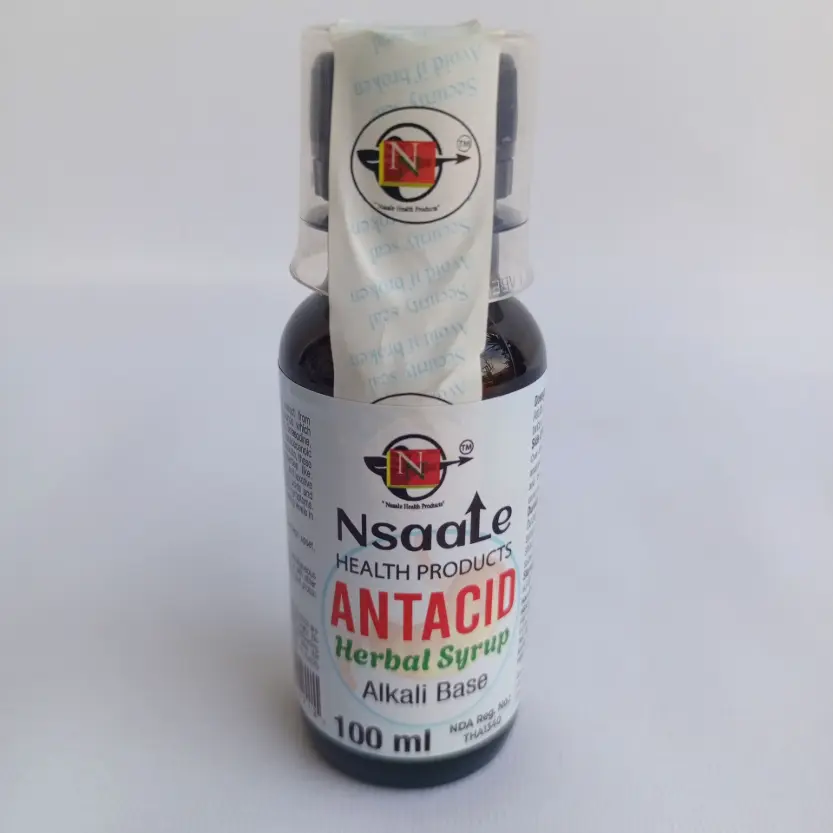
PHYTOCHEMICAL ANALYSIS REPORT: NSAALE GASTRO-SHIELD BIO-SYRUP
Product Category: Gastro-protective & Anti-ulcer Syrup
Target Indications: Stomach ulcers, upper abdominal pain, indigestion, heartburn, and bloating.
1. Bioactive Compound Profile
The therapeutic efficacy of Gastro-shield is attributed to a specific array of phytochemicals that target the gastric environment through multiple pathways.
|
Phytochemical Marker |
Chemical Class |
Mechanism of Action in Gastric Care |
|
Daidzein |
Isoflavone |
Acts as a potent antioxidant; reduces oxidative damage to the gastric mucosa and inhibits inflammatory cytokines. |
|
Solasodine |
Steroidal Alkaloid |
Provides cytoprotective effects by strengthening the mucosal barrier and reducing the severity of gastric lesions. |
|
Phenanthrenequinone |
Quinoid Compound |
Exhibits significant antimicrobial activity, potentially inhibiting H. pylori colonization. |
|
Alpha-naphthol |
Phenolic Compound |
Functions as a mild antiseptic and antioxidant, neutralizing free radicals in the stomach lining. |
|
Dodecanoic / Hexadecenoic Acids |
Fatty Acids |
These lipids form a protective hydrophobic layer over ulcerated tissue, shielding it from corrosive gastric acid. |
|
Tetradecanoate |
Ester |
Assists in the stabilization of the syrup and enhances the bioavailability of the herbal extracts. |
2. Therapeutic Mechanisms for Ulcer Management
A. Anti-Secretory & Acid Neutralization
The presence of specific terpenoids and phenolic compounds in Eucalyptus spp. helps modulate the H+/K+-ATPase (proton pump) activity. By regulating gastric acid secretion, the syrup reduces the "burning" sensation (heartburn) and prevents further erosion of the stomach lining.
B. Mucosal Barrier Protection
The long-chain fatty acids (Dodecanoic and Octadecenoic acids) act as surfactant-like agents. They reinforce the gastric mucus layer, providing a physical barrier between the gastric juice and the delicate epithelial cells. This is crucial for relieving pain in the upper abdomen and allowing existing ulcers to heal.
C. Eradication of Gastric Irritants
Solasodine and Phenanthrenequinone possess antimicrobial properties. Research into Eucalyptus spp. suggests these compounds are effective against Helicobacter pylori, the primary bacterial cause of chronic stomach ulcers.1 By reducing the bacterial load, the syrup addresses the root cause of inflammation.
D. Carminative & Anti-bloating Action
The volatile components of the Eucalyptus extract assist in relaxing the gastrointestinal smooth muscles. This promotes the expulsion of gas, directly relieving symptoms of bloating and indigestion.
3. Qualitative Phytochemical Screening (Projected)
|
Test |
Result |
Indication |
|
Wagner’s Test |
Positive (++) |
Presence of alkaloids (Solasodine) for cytoprotection. |
|
Ferric Chloride Test |
Positive (+++) |
Presence of Phenolic compounds (Alpha-naphthol) for antioxidant action. |
|
Foam Test |
Positive (+) |
Presence of Saponins which aid in the emulsification of the fatty acid components. |
|
Salkowski Test |
Positive (+++) |
High Terpenoid content, essential for anti-inflammatory response. |
4. Summary & Conclusion
The Nsaale Gastro-shield Bio-Syrup is a multi-modal formulation. While standard antacids only neutralize existing acid, the phytochemical profile of this syrup suggests a triple-action approach:
- Neutralization of excess acid.
- Coating of the ulcerated tissue with lipid-based esters.
- Healing of the underlying tissue through the antioxidant properties of Daidzein and Solasodine.
This makes it highly suitable for individuals seeking a natural intervention for chronic gastritis and peptic ulcer disease.
Disclaimer: This report is based on the phytochemical properties of the listed ingredients. It is not a substitute for professional medical diagnosis. Consult a healthcare provider for the management of severe gastrointestinal conditions.